Back to articles
Solar Energy

FIG. 01 — SOLAR RADIATION AS AN ENERGY SOURCE

FUNDAMENTALS — RENEWABLE ENERGY

What is Solar Energy?

Solar energy is the energy produced by the sun's radiation — one of the most abundant, clean, and renewable power sources available on Earth. Every hour, the sun delivers enough energy to meet global electricity demand for an entire year; the real challenge has never been scarcity, but capturing and converting that energy efficiently. Solar technology does exactly that, turning sunlight into usable electricity or heat through a handful of distinct methods, each suited to different needs — from powering a single home to running a utility-scale power plant.

CONVERSION METHODS — 3 APPROACHES

How Solar Energy Works

Sunlight can be captured in more than one way. Depending on the technology, it's converted directly into electricity, turned into heat, or used to drive a turbine at industrial scale. Here are the three main approaches.

01METHOD 01 / 03

Photovoltaic (PV) Solar Panels — Electricity Generation

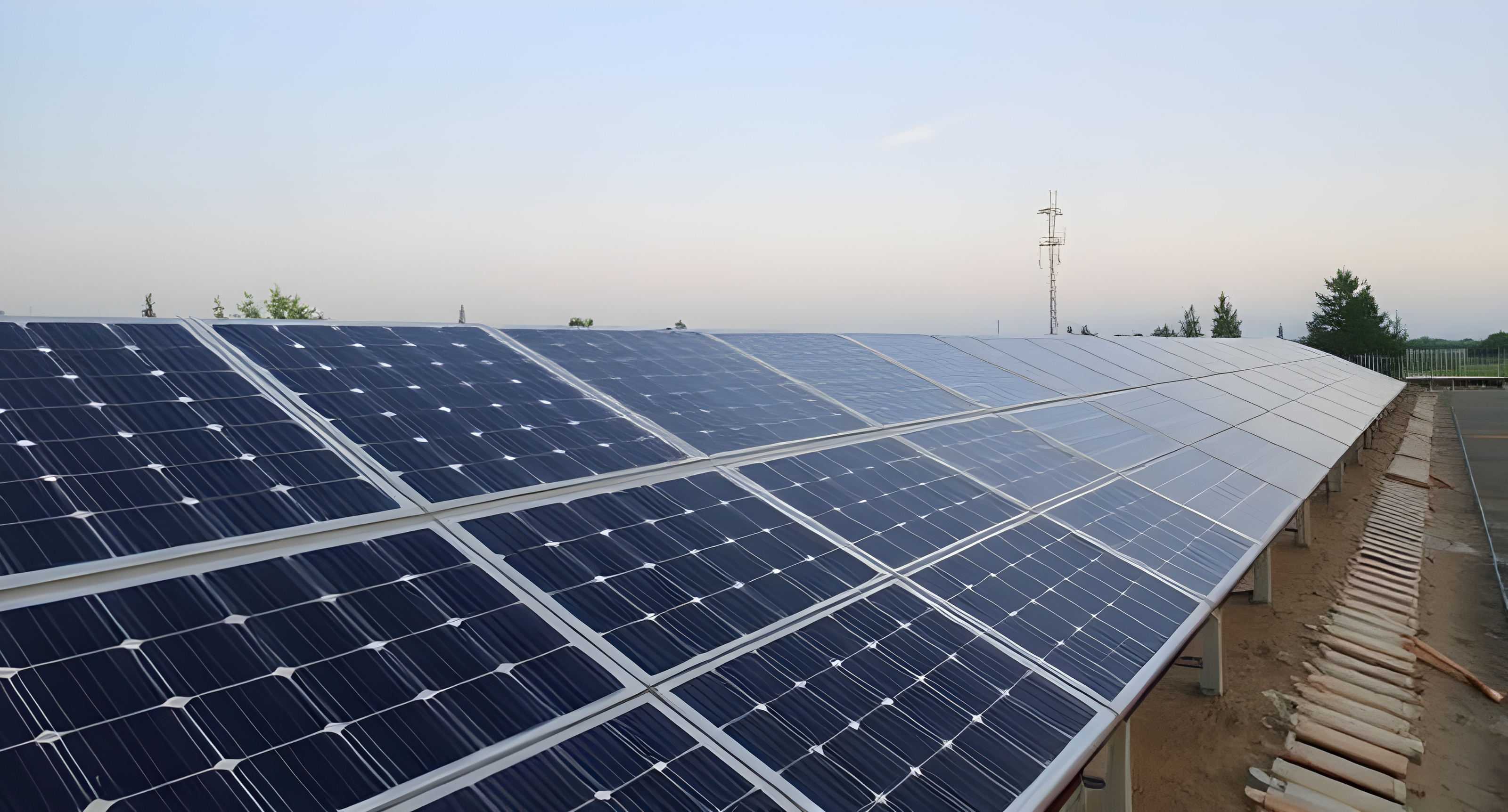
Photovoltaic (PV) solar panels are the most widely used technology for converting sunlight into electricity. Made from semiconductor materials like silicon, PV cells generate an electric current the instant sunlight strikes them — a direct, mechanical-free conversion that's remained the backbone of residential and commercial solar for decades.
Photovoltaic Panels

FIG. 02 — PV CELLS ON A ROOFTOP ARRAY

HOW IT WORKS
1
Sunlight strikes the PV cells, exciting electrons and generating a flow of direct current (DC) electricity.
2
An inverter converts that DC electricity into alternating current (AC), the form used by household appliances.
3
The AC electricity powers your home directly, or is sent to the grid or a battery for later use.
TYPES OF SOLAR PANELS
Monocrystalline — more efficient, but more expensive.
Polycrystalline — less efficient, but more affordable.
Thin-Film — lightweight and flexible, but lower efficiency.
APPLICATIONS
Residential solar panels on rooftops
Large-scale solar farms
Portable solar-powered devices
02METHOD 02 / 03

Solar Thermal Energy — Heat Generation

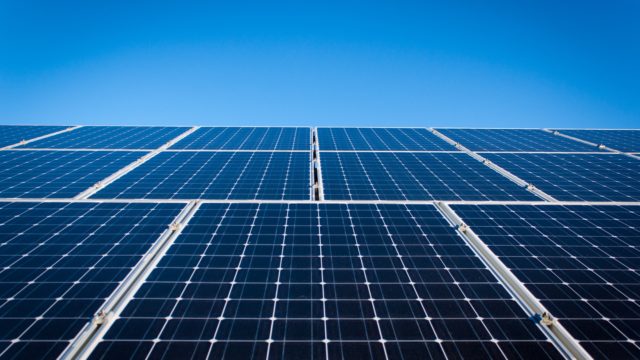
Solar thermal technology captures the sun's heat directly, rather than converting it into electricity. Flat-plate or evacuated-tube collectors absorb solar radiation and transfer that heat into a circulating fluid — usually water or a glycol mix — making it one of the most efficient ways to generate hot water or space heating for buildings and industrial processes.
Solar Thermal

FIG. 03 — SOLAR THERMAL COLLECTOR ARRAY

HOW IT WORKS
1
Solar collectors absorb sunlight and convert it directly into heat energy.
2
That heat transfers into a circulating fluid, which carries it to where it's needed.
3
The heat energy is used directly for heating buildings, water systems, or industrial processes.
TYPES OF SOLAR THERMAL SYSTEMS
Flat-Plate Collectors — simplest and most common, ideal for residential water heating.
Evacuated Tube Collectors — more efficient in colder climates thanks to vacuum-sealed tubes that cut heat loss.
Solar Water Heaters — integrated collector-and-tank systems built for direct household use.
APPLICATIONS
Residential and commercial water heating
Space heating for buildings
Industrial process heat, such as food processing and textiles
03METHOD 03 / 03

Concentrated Solar Power (CSP)

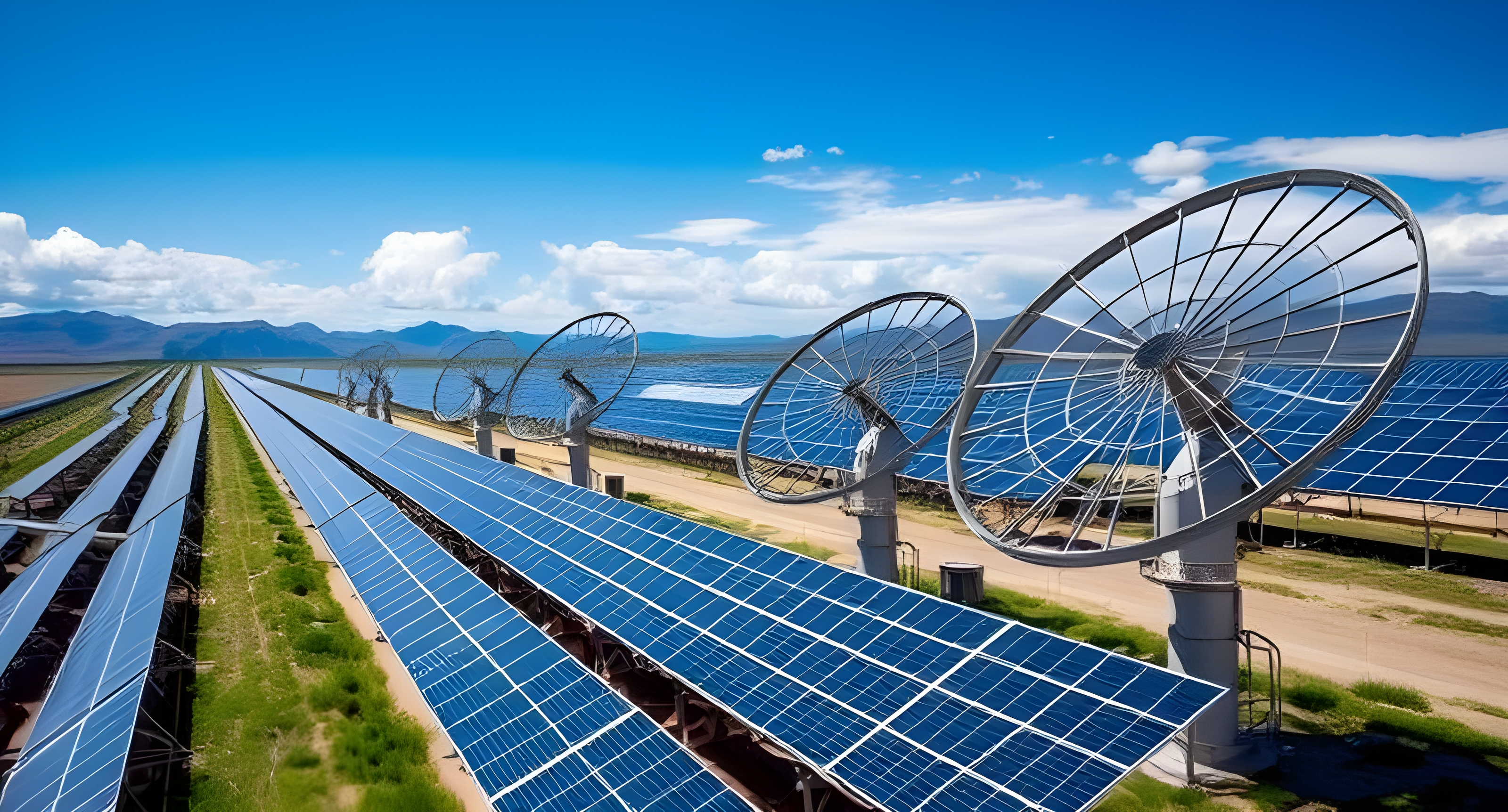
Concentrated Solar Power (CSP) systems use mirrors or lenses to focus sunlight onto a small receiver area, generating enough heat to produce steam and drive a turbine. Unlike PV panels, CSP is typically deployed at utility scale, making it especially well-suited to large solar farms in high-sunlight regions.
CSP

FIG. 04 — CSP MIRROR FIELD AND RECEIVER TOWER

HOW IT WORKS
1
Mirrors or lenses track the sun and focus sunlight onto a central receiver.
2
The receiver heats a fluid to extremely high temperatures, producing steam.
3
That steam drives a turbine connected to a generator, producing electricity.
TYPES OF CSP SYSTEMS
Parabolic Trough — curved mirrors focus sunlight along a line onto a receiver tube; the most widely deployed CSP design.
Solar Power Tower — a field of flat mirrors (heliostats) focuses sunlight onto a single receiver atop a central tower.
Dish/Engine Systems — parabolic dish reflectors concentrate sunlight onto a small receiver connected to an engine.
APPLICATIONS
Utility-scale power plants
Grid-level renewable energy, often paired with thermal storage for nighttime output
Industrial-scale steam generation